
Which Pans You Actually Need: Building a Kit by Cooking Task
A fourteen-piece set contains four pans you use and ten that store badly. Work from the tasks you repeat instead, and the list comes out short.

A fourteen-piece set contains four pans you use and ten that store badly. Work from the tasks you repeat instead, and the list comes out short.

Ceramic nonstick is not ceramic. It is a silica-based sol-gel layer, it contains no fluoropolymers, and it loses its release through a different mechanism than PTFE does.

Both are iron, both season the same way, and both conduct heat at about the same rate. The difference is thickness — and that one difference changes how each pan behaves in use.
18/10 describes the cooking surface. Tri-ply describes the construction. Neither tells you the one figure that decides how the pan behaves: how thick the conductive core is.

Hold a magnet to the base. If it grips firmly, the pan works on induction; if it slides off, it does not. Here is why that test is reliable, and why 18/10 stainless alone fails it.
PTFE releases fumes at around 500 °F and begins to decompose at 752 °F. An empty pan on a high burner reaches the first figure easily. Here are the real numbers, and what PFOA has to do with any of it.
In August 2025 the FDA warned that certain imported aluminum, brass and Hindalium or Indalium alloy cookware may leach significant lead into food, and told consumers to throw it away rather than donate it.
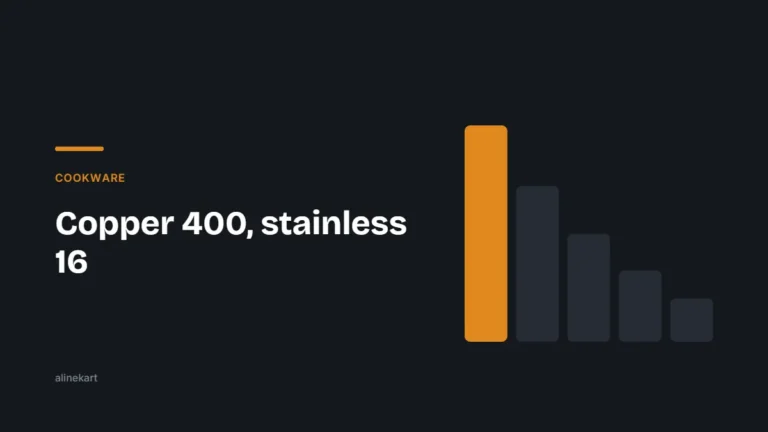
Two properties decide how a pan behaves: how fast it conducts heat sideways, and how much heat it stores. Copper conducts 25 times better than stainless steel. That single ratio explains most of the market.