

Which Pans You Actually Need: Building a Kit by Cooking Task
A fourteen-piece set contains four pans you use and ten that store badly. Work from the tasks you repeat instead, and the list comes out short.

Ceramic and Sol-Gel Nonstick Coatings: What They Are and How They Fail
Ceramic nonstick is not ceramic. It is a silica-based sol-gel layer, it contains no fluoropolymers, and it loses its release through a different mechanism than PTFE does.

Cast Iron vs Carbon Steel: Thermal Mass, Weight and Seasoning
Both are iron, both season the same way, and both conduct heat at about the same rate. The difference is thickness — and that one difference changes how each pan behaves in use.
Stainless Steel Cookware: What ‘Tri-Ply’ and ’18/10′ Really Tell You
18/10 describes the cooking surface. Tri-ply describes the construction. Neither tells you the one figure that decides how the pan behaves: how thick the conductive core is.

Will It Work on Induction? The Ferromagnetic Base Test
Hold a magnet to the base. If it grips firmly, the pan works on induction; if it slides off, it does not. Here is why that test is reliable, and why 18/10 stainless alone fails it.
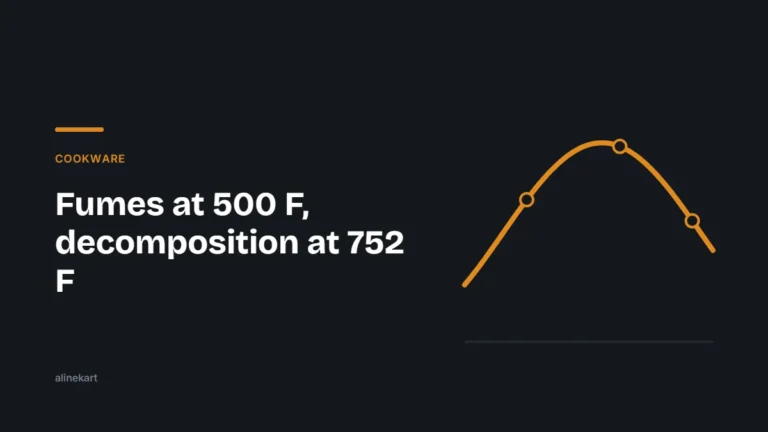
Nonstick Pans and PTFE: The Temperature Limits That Actually Matter
PTFE releases fumes at around 500 °F and begins to decompose at 752 °F. An empty pan on a high burner reaches the first figure easily. Here are the real numbers, and what PFOA has to do with any of it.